KRATOM OVERDOSE LAWSUITS
Kratom Kills. If You Lost a Loved One to Kratom, You May Have a Case.
Roberts | Jeandron Law is investigating kratom wrongful death and injury cases across California and Texas. Kratom manufacturers and distributors have profited by marketing a deadly, opioid-like substance as a safe, natural supplement — while concealing its true risks from consumers. It is time to hold them accountable.
Free Consultation | No Fee Unless We Win | Serving California & Texas

What Is Kratom — and Why Is It So Dangerous?
Kratom is an herbal extract derived from the leaves of Mitragyna speciosa, a tropical tree native to Southeast Asia. In its natural form, kratom has been used in traditional practices for centuries. But the commercialized kratom products sold in the United States today are something else entirely.
Modern kratom products — sold as tablets, powders, capsules, liquid shots, and gummies — bear no resemblance to the natural plant. They are concentrated, engineered substances that act on the brain’s opioid receptors and can cause addiction, respiratory failure, and death.
In 2021, approximately 1.7 million Americans aged 12 and older used kratom. Many of them believed it was safe. They were misled.
How Kratom Works in the Body
When ingested, kratom’s alkaloid compounds — including mitragynine and a particularly dangerous compound called 7-Hydroxymitragynine (7-OH) — bind to the brain’s opioid receptors. The effects closely mimic opioids and morphine:
- Euphoria and sedation
- Analgesia — pain relief
- Respiratory depression — the same mechanism that kills opioid overdose victims
- Physical dependence and withdrawal symptoms
- Seizures and liver toxicity at higher doses
7-OH in particular is far more potent than the plant’s primary alkaloid. Some commercial products have been found to contain 7-OH concentrations of up to 98%. These are not herbal supplements. They are powerful, unregulated opioids.

Marketed as Safe. Sold as Deadly.
Despite kratom’s well-documented dangers, manufacturers and distributors have built their businesses on a foundation of false promises. Products are marketed as:
- “Premium quality, lab tested for your safety”
- “All-natural herbal supplement”
- “A healthy alternative to opioids”
- “Safe for everyday use”
Behind the carefully crafted labels and marketing lies a far more dangerous reality — one that manufacturers knew about and deliberately concealed. Industry marketing has been virtually silent about the risks of dependency, respiratory depression, and fatal overdose. Kratom companies have been assuring consumers their products could be trusted, even as scientific evidence continued to mount.
The FDA has documented a direct link between kratom products and hundreds of deaths nationwide. A CDC analysis found that kratom was implicated in at least 846 fatal overdose cases across 30 states and Washington D.C. in 2022 alone. Despite this, companies continue to sell these products — often through gas stations, smoke shops, and online retailers — with little to no warning to consumers.
[ PULL QUOTE: “Kratom companies built a deceptive marketing strategy on lies and omissions — assuring consumers their product could be trusted, even as evidence mounted that it could depress breathing, cause dependency, and kill.” ]
Who May Be Eligible to File a Kratom Lawsuit?
Kratom lawsuits can be brought by injured individuals and by families who lost a loved one to kratom overdose or kratom-related complications. You may have a case if:
- A family member died from kratom overdose or acute mitragynine intoxication
- A loved one suffered respiratory failure, seizures, organ damage, or cardiac events linked to kratom use
- You or a family member developed a kratom addiction that required medical treatment
- You purchased and used kratom products that were not adequately labeled with health warnings
- A kratom product contained higher concentrations of mitragynine or 7-OH than what was disclosed on the label
Both wrongful death claims — brought by surviving family members — and personal injury claims — brought by those who were injured but survived — may be available depending on the facts of your case. You do not need to have purchased from a specific brand or retailer. Our attorneys will investigate the full details of your situation.
Types of Legal Claims Available
Kratom lawsuits typically involve one or more of the following legal theories:
- Failure to Warn — Manufacturers and sellers had a legal duty to warn consumers about the known risks of kratom, including addiction, respiratory depression, and death. Their failure to do so can form the basis of a product liability claim.
- Manufacturing Defect — Some kratom products have been found to contain far higher levels of dangerous alkaloids than disclosed on the label, making those products defective.
- Design Defect — Products containing concentrated levels of 7-OH may be defective by design, because no reasonable consumer would expect a supplement to contain potency levels rivaling prescription opioids.
- Negligence — Companies that designed, manufactured, distributed, and sold kratom owed a duty of care to consumers. Breaching that duty by placing a dangerous product on the market without adequate testing or warnings can constitute negligence.
- Consumer Protection Violations — Misrepresenting kratom as safe and healthy may violate state consumer protection statutes, including California’s Unfair Competition Law and comparable Texas law.
Kratom in California: What You Need to Know
California has taken some of the most aggressive regulatory action against kratom of any state in the nation. On October 24, 2025, the California Department of Public Health declared that foods, dietary supplements, and medical drugs containing kratom or 7-OH are dangerous and illegal to sell or manufacture for human consumption in California.
Governor Gavin Newsom subsequently announced that within just weeks of the enforcement campaign, agents had removed more than 3,300 kratom and 7-OH products from licensed businesses statewide — achieving 95% compliance. This extraordinary regulatory response reflects how seriously California officials view the threat kratom poses to public health.
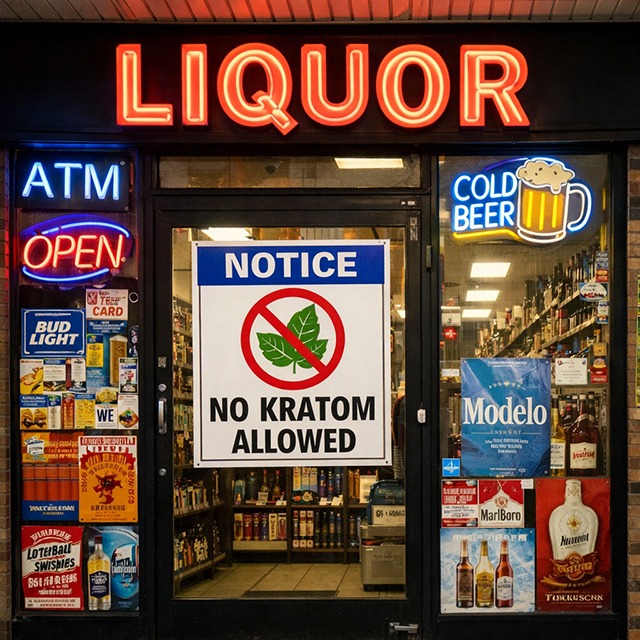
If you or a loved one were harmed by kratom in California, this regulatory record matters. It establishes that California authorities recognized these products as dangerous — and that continued sales after that declaration may constitute additional legal wrongdoing by retailers and distributors.
Roberts | Jeandron Law handles cases in both California and Texas and is handling Kratom overdose cases in Los Angeles County, Riverside County, Orange County, San Diego County, and more.
Kratom in Texas: A Growing Legal Crisis
Texas has also taken significant steps to address the kratom crisis. Senate Bill 1868, passed during the 89th Texas Legislative Session and effective September 1, 2025, established one of the strictest regulatory frameworks for kratom products in the country. The law bans synthetic alkaloids entirely and limits 7-OH concentrations to 0.1% — a dramatic restriction on the highly potent commercial kratom products that have been linked to deaths and serious injuries.
Texas health authorities have also issued public warnings regarding serious illnesses associated with 7-OH use. The Texas Department of State Health Services has documented cases of severe harm to Texas consumers from these products.
If you or a family member was harmed by kratom in Texas — before or after these new regulations took effect — you may still have valid legal claims. Vendors and manufacturers who sold dangerous, non-compliant products to Texas consumers can be held accountable.
Our attorneys are pursuing kratom injury and wrongful death cases across the state of Texas, including Houston, Dallas, San Antonio, Austin, and surrounding areas.
Why Roberts | Jeandron Law?
Kratom cases are complex. They require attorneys who understand product liability law, pharmaceutical regulations, toxicology, and wrongful death litigation. At Roberts | Jeandron Law, we bring the dedication, resources, and legal expertise needed to take on powerful kratom companies — and to fight for the compensation your family deserves.
- California-based firm with deep knowledge of California consumer protection and product liability law
- Actively investigating or handling kratom litigation in both California and Texas
- Experience in wrongful death and catastrophic injury litigation
- We work on a contingency fee, meaning you pay nothing unless we win.
- Free, confidential consultations with no obligation
- Compassionate representation for grieving families — we treat every case with the seriousness it deserves
Frequently Asked Questions
If a loved one died or was seriously injured after using a kratom product, you may have a claim regardless of where the product was purchased. Contact us for a free evaluation — we will review the facts and let you know what legal options may be available.
Compensation in kratom cases may include funeral and burial expenses, medical expenses, loss of financial support, loss of companionship and emotional support, and punitive damages in cases involving particularly reckless conduct by the manufacturer or seller.
Each state has a statute of limitations — a deadline by which lawsuits must be filed. In California, wrongful death claims generally must be filed within two years of the date of death. In Texas, the deadline is also typically two years. Do not wait — missing this deadline can permanently eliminate your right to compensation.
Not necessarily. Our attorneys will investigate the products your loved one used and identify all potentially liable parties, which can include manufacturers, distributors, and retail sellers.
Nothing upfront. We handle kratom cases on a contingency fee basis, which means we only get paid if we win compensation for you. There are no out-of-pocket costs to get started.
Yes. Retailers who sell dangerous products without adequate warnings can also be held liable, in addition to manufacturers and distributors.
Your Family Deserves Answers. We Can Help.
If kratom took someone you love, you are not alone — and the companies responsible should be held accountable. Contact Roberts | Jeandron Law today for a free, confidential consultation. We serve clients throughout California and Texas.
(949) 719-6885 | intake@rjinjurylaw.com | California & Texas