
 By:
By: Motorcycle lane splitting, also called lane filtering in California, is defined as a vehicle riding in between the lanes of slower traffic or sharing space with another car in the same lane. Lane splitting in California is a legal and regulated practice, and the law defines lane splitting as a motorcycle, which must have two wheels, moving between rows of stopped or moving vehicles in the same lane. According to the California Vehicle Code section, what is considered lane splitting involves a motorcycle moving between rows of stopped or moving vehicles in the same lane. California law allows motorcyclists to split lanes under certain conditions, provided they follow established safety guidelines. While this practice is not legal for passenger vehicles, it’s a different story for those on motorcycles, as lane splitting legal in California is explicitly recognized by state law.
The California Highway Patrol provides guidelines for safe lane splitting and is tasked to develop educational guidelines relating to the practice. Developing guidelines pursuant to the California Vehicle Code section, the CHP consults with motorcycle organization focused on safety and other agencies to ensure the guidelines promote road safety and traffic safety for all road users. These educational guidelines are essential for informing the public and reducing risks associated with this advanced maneuver.
California lane-splitting laws were designed for motorcyclists, allowing them to split the lane when necessary to safely move through traffic. Lane splitting in California helps reduce traffic and improve traffic flows, especially during peak congestion. Even though motorcycle lane splitting is legal in the state, you should know the risks and how to correctly engage in lane filtering in California. When describing lane filtering, it’s important to note that lane sharing—where two motorcycles ride side by side in the same lane—differs from lane splitting and is also subject to specific rules. The California Vehicle Code outlines the conditions under which splitting lanes is permissible, emphasizing the importance of safety measures and compliance with traffic laws to avoid accidents and legal issues. Lane splitting is permitted on roads with two or more lanes moving in the same direction, including both divided and undivided streets, as specified by California law.
Splitting legal in California is unique, as California is the only state where lane splitting legal is explicitly permitted by law. State law sets California apart from other states, providing a clear legal framework for this practice.At Roberts | Jeandron Law, we specialize in providing expert legal advice for motorcycle riders in California. With our extensive understanding of the state’s laws and regulations, we are here to guide you through the intricacies of motorcycle lane splitting. In this article, we explore the concept of lane splitting, its legality in California, safety considerations, and the importance of consulting an experienced attorney in the event of legal issues.
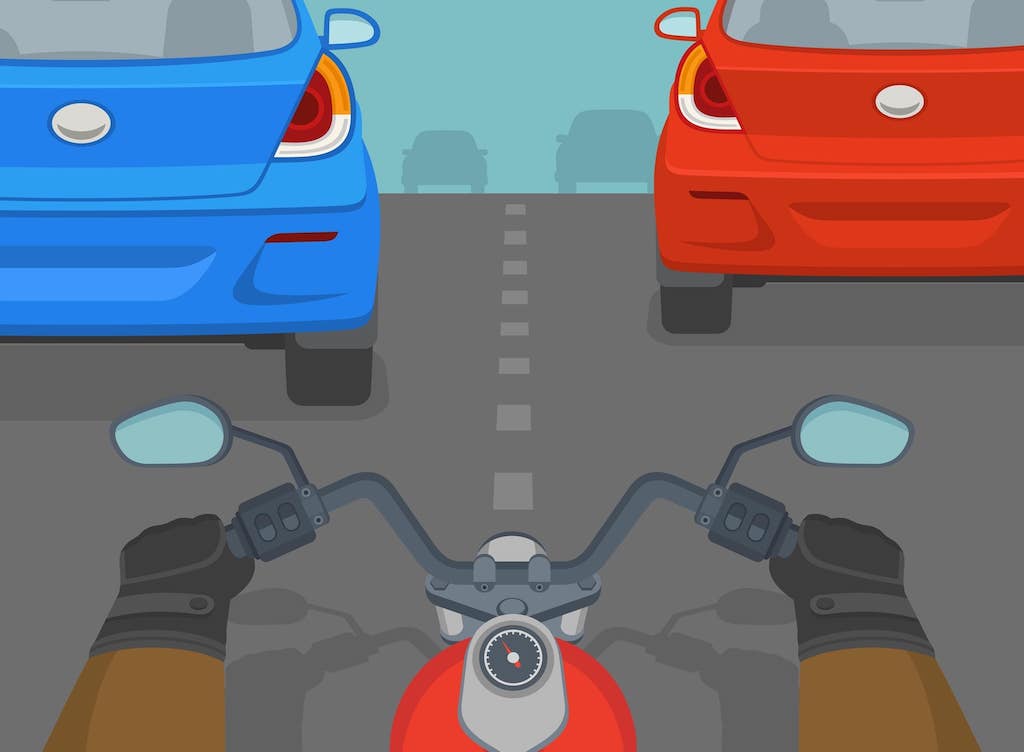
What Is Lane Splitting?
California lane-splitting laws permit motorcyclists to ride between lanes of traffic to move past any slow or stalled traffic. When a motorcyclist rides between lanes, this maneuver is known as a lane split. While the laws don’t place strict limits on speed, it is ideal for motorcyclists to only engage in this practice in limited circumstances. Lane splitting involves riding between two lanes of traffic moving in the same direction, and lane splitting motorcyclists must always be mindful of their surroundings.
Lane filtering in California can also refer to when two motorcycles ride side-by-side in the same lane, something that is encouraged at night as they become more visible to other motorists. If a motorcyclist plans on splitting a lane between passenger vehicles or other motor vehicles, they should exercise caution, especially around stopped vehicles. It is also crucial to be aware of blind spots, particularly around larger vehicles, to avoid potential accidents. Understanding motorcyclist behavior is important for promoting safe riding practices.
For example, it should never be done when there is a curve. It can also startle other drivers, which could lead to accidents. Motorcycle lane splitting may seem simple in theory, but it is a maneuver that requires practice. Considering traffic flow and the presence of other traffic is essential to determine the appropriateness of lane splitting. Additionally, being aware of surrounding traffic is vital to ensure safety. Riders should avoid lane splitting in unsafe conditions, such as at high speeds or next to large vehicles. It can be difficult even for experienced riders, and all motorcyclists are urged to be extensively cautious when engaging in this practice on the road.
Safety Measures and Tips for Motorcycle Riders Practicing Lane Splitting
Motorcycle lane splitting may be legal in the state, and while all drivers have a duty to share the roads with motorcyclists, there are a few caveats. Lane splitting can help alleviate traffic congestion. If you ride a motorcycle, you must understand that California lane-splitting laws do not give you complete permission to ride in the middle of vehicle lanes. You must uphold your duty to ride with reasonable caution, especially in traffic congestion.
This means only using lane splitting when the traffic has stopped or slowed to a crawl. You shouldn’t try lane splitting when traffic is moving at or close to the speed limit. Keep in mind that many drivers often fail to notice motorcyclists, and that is even truer when motorcyclists are lane-splitting. Higher speed differentials can increase the danger, so it is generally safer to split between the far left lanes. Adhering to speed limits is crucial for safety. It is important to note that lane splitting dangerous situations can arise, especially at higher speeds or when other drivers are not aware of your presence.
Whether you’re lane splitting or not, you should make every effort to be visible to the other drivers on the road. Never surreptitiously ride behind other vehicles and always watch for vehicles that are changing lanes. Being aware of surrounding vehicles is essential. Always exercise reasonable caution and extreme caution to ensure your safety and the safety of others. Wearing appropriate protective gear, such as a helmet and reflective clothing, is highly recommended to minimize injuries and enhance your visibility on the road.
Here are some safety tips for lane splitting:
- Maintain a safe speed and avoid splitting lanes at high speed differentials.
- Evaluate the environment and avoid lane splitting in areas with limited space or unpredictable traffic.
- Make yourself as visible as possible to other drivers, using lights and reflective gear.
- Always be prepared to stop or adjust your position if a vehicle changes lanes unexpectedly.
What Happens If Motorcycle Lane Splitting Leads to an Accident?
Since California uses a fault-based insurance model, if you get in a motorcycle collision while lane splitting, you will have to prove fault by showing that a driver caused the crash. Motorcyclists are often blamed for their injuries as insurers find this mode of transport to be risky. To support your claim, it is crucial to gather evidence, such as witness testimonials and accident reconstructions. The insurance company will review the evidence and may dispute liability or the amount of damages, so having strong documentation is essential. If the other driver is found at fault, they may be held liable for your damages.
You have rights as a motorcyclist, and injured motorcyclists should not be stuck with medical bills and lost wages if they were following the law. Compensation can include recovery for medical expenses, lost income, and pain and suffering. It helps to speak with a car accident lawyer who has experience representing motorcycle injury victims to understand your legal options.
California lane-splitting laws allow you to ride between the lanes, but you must do so with caution. Engaging in unsafe lane splitting or willful disregard for safety can be considered reckless driving under California law and may result in legal consequences. Determining fault in a lane splitting accident can be complex, especially when negligent lane splitting is involved. The fault rule in California requires identifying the responsible party to secure compensation. If you’re in an accident, you need to know your rights and what you can collect in compensation to cover the injuries caused by a negligent driver.
The Importance of Consulting an Experienced Attorney in Motorcycle Accidents
Rest assured, even if you were following the law, you could likely be blamed for your injuries. This is why you should consult a motorcycle accident attorney to understand the importance of legal representation. It is crucial to claim compensation for damages to cover your losses. Make use of the free initial consultation with a car accident attorney at Roberts | Jeandron Law to learn more about your legal rights in the aftermath to avoid taking all of the blame and to ensure you receive fair compensation.